































Choosing the right product doesn’t start with ads, but with understanding your own needs and the real limits of any formula. To navigate the many options responsibly, it is useful to follow a simple four-step filtering process: real need, reading the label, understanding the limits, testing and adjusting.
1. Start with need, not trends
A product that is extremely popular on social media is not automatically right for you. Before adding something to your cart, ask yourself: what specific problem am I trying to solve? (for example, compromised skin barrier, unsynchronized sleep, or insufficient micronutrient intake from food). If the product does not meet a clear requirement in your routine, it is probably just an impulse purchase.
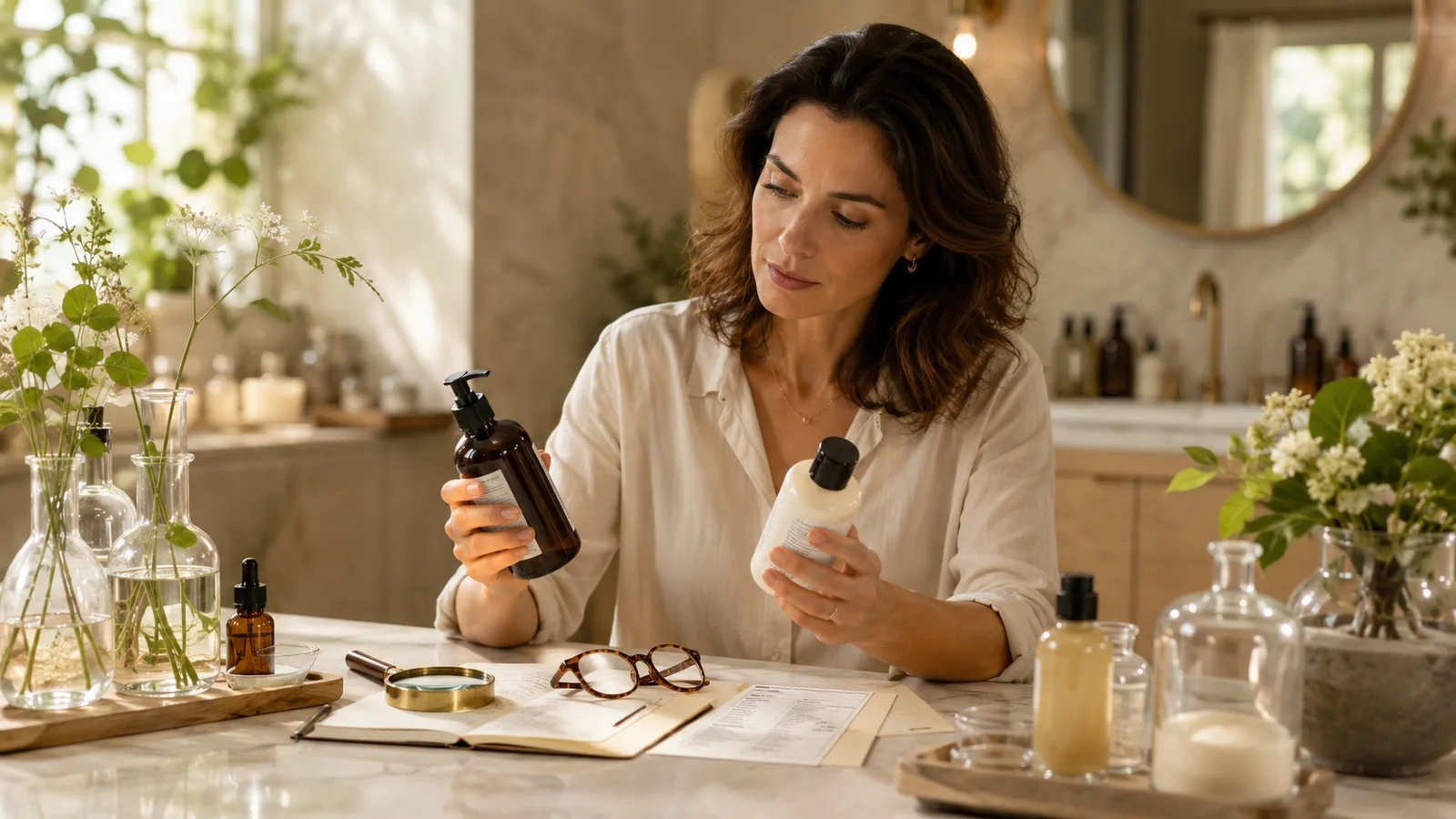
2. Go beyond the packaging: read the full label
The front of the package is marketing space, while the back represents the technical, legal, mandatory reality. The necessary attention should be given depending on the type of product being analyzed.
For cosmetics, analyze the INCI list, noting that ingredients are listed in descending order by concentration, down to the 1% threshold.
For food supplements, check the chemical form of the substances and the dose per daily serving, not just per capsule.
There are food supplements sold in other countries about which you may not have much information — we recommend researching them online, in reliable databases (for example, government websites or regulatory authorities). Depending on the legislation of the country where they are placed on the market, the target audience, or health insurance systems, they may be registered as food supplements, medicines, medical devices, or traditional remedies.
In some cases, you will be surprised by their extremely beneficial effect on the body (for example, Antrodia cinnamomea, also known as the “Ruby of Taiwan,” has been studied scientifically for a long time; according to clinical studies published in official international databases, it has several effects worth studying — see PubMed, NCBI MeSH, or PMC).
3. Understand what a product CAN and CANNOT do
No food supplement will replace 8 hours of sleep or a balanced diet, and no cream will completely eliminate the skin’s natural structure or a skin concern. Health always comes from within. Any product we take or apply to restore our health (and not just a temporary sense of wellbeing) will fulfill its purpose only if the body perceives it as support, not as an obligation.
Products in the health, wellbeing, and beauty segment are support tools. When evaluating a product, we should look for benefits that are plausible and supported by context, not promises of miraculous overnight transformations or various marketing campaigns.
4. Gradual introduction
We are unique, and the reaction to active ingredients varies from person to person.
In skin care, for cosmetic products, a test on a small area (patch test) — usually in the crease (flexion fold) of the elbow or behind the ear — can prevent major skin irritation or allergic reactions.
For food supplements, introducing only one new product at a time allows you to correctly assess digestive tolerance and real impact. These too can be accompanied by adverse or unwanted effects — not only medicines. Often, the combination of medicine – food supplement – everyday foods that are part of everyone’s diet can disrupt the body’s normal functioning.
Conclusion & Life Pro Science recommendation
The best product for you is not the one that promises the most or dominates social media, but the one that addresses a real need in your routine. Shopping guided by informed curiosity — not by impulse or fear of missing out on a trend — is the only kind that brings visible, safe results, as well as long-term savings.
Continue reading in the Journal
Ingredient guide