






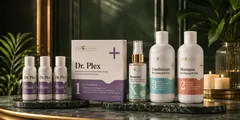










Misinformation in the beauty industry is not limited to urban myths; it is a marketing model that exploits the consumer’s lack of scientific education. When you do not know the basic biology of the hair shaft, you become vulnerable to spectacular promises and viral trends that, instead of helping, can compromise the health of the scalp and hair fiber.
The link between misinformation and an incorrect care routine appears in four critical ways:
- replacing physiology with miracle slogans: ads that promise “permanent repair of split ends” or “accelerated growth overnight” work because they hide a simple biological fact - the visible hair shaft is a keratinized structure, without living cells. Without this information, consumers buy the illusion of “healing” the hair shaft instead of investing in prevention, heat protection, and consistent hydration;
- unconditionally adopting viral trends: social media frequently promotes highly specific techniques as universal solutions. Without the correct information that the scalp is skin (it needs cleansing and a balanced microbiome), while the hair lengths are made of fibers (they need emollience), chaotic application of these trends leads to a compromised microbiome, folliculitis, dandruff, and hair loss;
- unfounded fear as a sales tool: the systematic demonization of certain ingredient categories (silicones, sulfates, preservatives) creates confusion. Without correctly reading the INCI list, the consumer eliminates sulfates even when they have an oily scalp that requires deep cleansing, or avoids simple silicones, losing the only effective shield against heat damage caused by a flat iron or blow dryer;
- overloading the hair: misinformation supports the idea that “more products mean better results.” Not knowing how to identify whether the hair needs water (hydration), oils (emollience), or keratin (proteins), the consumer applies all masks and treatments at the same time. The result is rigid, brittle hair (excess protein) or dull, sticky hair with no volume (excess lipids).
To build an effective routine, it is essential to clearly understand what message your hair is sending you.
Here are our recommendations, in brief, so you can identify your hair’s specific needs and how you can take action.
How do you identify what your hair is missing?
Lack of hydration - dehydrated hair
How it looks and feels: it is dull, charged with static (the frizz effect), tangles easily, and lacks flexibility.
Solution: it needs humectant ingredients that attract and retain water in the hair shaft.
Key ingredients to look for in the products you purchase: hyaluronic acid, aloe vera, glycerin, honey, panthenol (pro-vitamin B5).
Lack of emollience and flexibility - dry, rough hair
How it looks and feels: it feels very rough to the touch, rigid, brittle, and lacks shine. The outer lipid layer (the cuticle) is affected.
Solution: it needs emollient ingredients that restore the protective barrier and seal in moisture.
Key ingredients: vegetable oils (argan, jojoba, olive, avocado), shea butter, cocoa butter, silk, ceramides.
Lack of protein - damaged hair
How it looks and feels: it is soft, lacks elasticity, seems “gummy” or stretchy when wet, and breaks easily (often after bleaching, repeated coloring, or excessive use of a flat iron/curling iron).
Solution: it needs proteins to fill the gaps in the hair shaft’s keratin structure.
Key ingredients: hydrolyzed keratin, silk, wheat, rice, or soy proteins, amino acids.
To become more aware of your hair concerns, you can perform tests at home or at the salon (with various specialized devices).
For example, at home you can perform the elasticity test, which involves taking a wet hair strand and gently stretching it:
- if it stretches slightly and returns to its original shape, it means the hair is balanced;
- if it stretches a lot, feels soft/gummy, and breaks, it means the hair lacks protein;
- if it does not stretch at all and breaks immediately, it means the hair lacks hydration or flexibility.
You can also perform the porosity test, which involves placing a clean hair strand in a glass of room-temperature water and waiting 3-5 minutes:
- if it floats on the surface - low porosity: the cuticle is tightly closed. Hair has difficulty absorbing products, but retains them well. It needs lightweight formulas and moderate heat when applying masks;
- if it stays in the middle - medium porosity: the hair is healthy and balanced;
- if it sinks - high porosity: the cuticle is open or damaged. It absorbs water quickly, but loses it just as fast. It needs rich products, oils, and proteins for sealing.
To support you, below we propose the structure of a basic routine and a complex hair care routine – depending on your hair type, the products must be adapted and the instructions on the product packaging followed.
As a general rule, keep in mind that:
- shampoo and lotion are exclusively for the scalp;
- mask, conditioner, serum, and lamellar water are applied only from ear level down.
| Hair care steps | Product category | Basic routine (2-3 times/week) | Complex routine (once/week or before styling) |
|---|---|---|---|
| Cleansing | Shampoo - always chosen according to scalp type (oily, dry, sensitive), not hair length |
| |
| Scalp treatment | Lotion / food supplement | Food supplement for hair growth (fixed period) | |
| Reconstruction (hair length) | Various products - always chosen according to scalp type (oily, dry, sensitive), not hair length |
|
|
| Heat protection | Various products | Volume booster | |
| Sealing ends | Serum | Serum with argan oil, vitamin E, ceramides and SPF 12 | |
| Finishing and hold (wet hair) | Various products | Hair mousse is applied immediately after the heat protection shield, to towel-dried damp hair. | Hair mousse is applied immediately after the heat protection shield, to towel-dried damp hair. |
| Finishing and hold (dry hair) | Various products | Shine spray is applied after the hair has been completely dried and styled (with a brush, flat iron or curling iron). | Shine spray is applied after the hair has been completely dried and styled (with a brush, flat iron or curling iron). |
| Finishing and hold (dry hair – the very last step) | Various products | Hairspray is used at the very end, after the Shine Spray has been applied, if needed, and the hairstyle has been arranged. | Hairspray is used at the very end, after the Shine Spray has been applied, if needed, and the hairstyle has been arranged. |
Conclusion & Life Pro Science recommendation
Hair does not have the skin’s ability to regenerate cells, but it can be protected and maintained in optimal condition through choices based on biology, not slogans. An effective routine does not mean piling on dozens of products in a single wash, but having a clear understanding of specific needs: proper scalp cleansing, alternating between hydration, emollience and proteins along the hair lengths, and constant protection against environmental factors.
When you give up misinformation and promises of miraculous overnight transformation, adopting a simple, consistent routine adapted to the structure of your hair strand, the results will be visible, sustainable and long-lasting.
Continue reading
The bioferment revolution