


















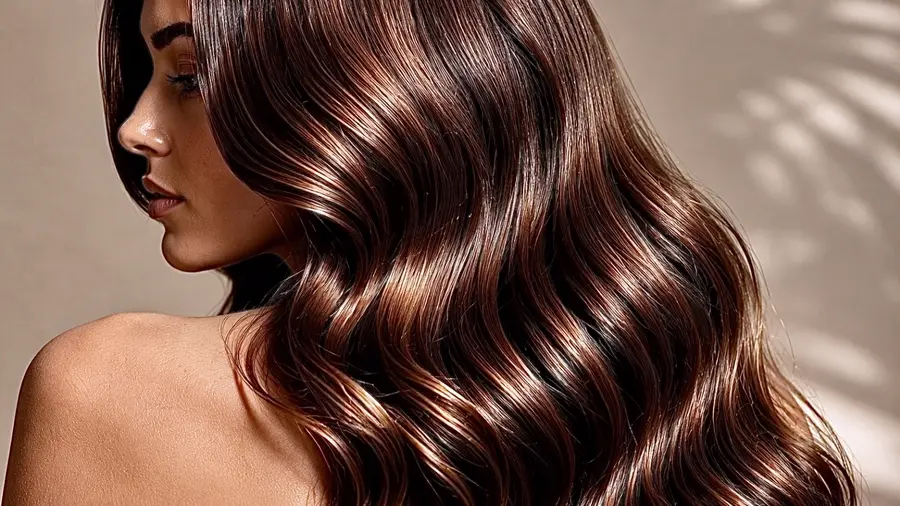















The hair care product market is dominated by spectacular promises: “instant repair,” “accelerated growth,” or “permanent sealing of split ends.” In reality, the visible hair shaft is a keratinized structure with no metabolic activity of its own (no living cells), while the only biologically active part is located beneath the skin: the hair follicle.
Proper, sustainable care does not begin with masking visible damage, but with a simple understanding of hair physiology.
To achieve strong, healthy hair, you need to reconfigure your routine around four fundamental pillars:
The scalp is an extension of the skin: cleansing is chosen for the scalp, not for the length of the hair
The most common care mistake is choosing shampoo based on the condition of the ends—for example, an ultra-nourishing shampoo for dry hair applied to a scalp that tends to get oily.
Shampoo has one main role: cleansing the scalp and removing excess sebum, dead cells, and product residue.
An unbalanced or insufficiently cleansed scalp can develop microbial inflammation, dandruff, or affect follicle nutrition.
Wash your scalp as often as needed, using gentle motions, without aggressively rubbing the lengths of the hair (the foam that runs down is enough to cleanse them).
The hair shaft is a textile fiber: prevention beats “repair”
Once the hair shaft has emerged from the scalp, it can no longer regenerate at the cellular level. Products that promise to “bond” split ends offer only a temporary cosmetic solution, by depositing polymers or silicones that smooth the surface until the next wash.
Conditioner and mask are meant to lubricate the cuticle (the outer layer of the hair shaft), reducing friction, static, and water loss.
Heat protection is mandatory before any source of heat (blow dryer, flat iron)—excessive heat irreversibly degrades the keratin structure and evaporates water from inside the fiber.
Follicle nutrition comes from within
The hair root is nourished exclusively through blood microcirculation in the scalp. No shampoo or serum applied to the hair can make up for a lack of micronutrients in the body.
Hair loss or thinning is often associated with iron deficiency, thyroid imbalances, a lack of protein in the diet, zinc, or B-complex vitamins (especially biotin).
Food supplements intended for hair work as metabolic support only if there is a real need or an identified deficiency, supporting cell division in the follicular matrix.
Patience and reducing mechanical stress
Hair grows, on average, 1–1,5 cm per month. Visible changes in the density or texture of newly grown hair can only be observed after 3–6 months of a consistent routine.
Reducing mechanical damage is just as important as the products applied: avoid aggressively combing wet hair (when the fiber is most elastic and vulnerable to breakage), tying it tightly with rigid elastics, and rubbing it vigorously with a towel.
Conclusion & Life Pro Science recommendation
Hair health does not depend on the number of layered treatments, but on respecting its biology. A clean, balanced scalp, a diet rich in essential nutrients, and constant protection of the lengths against mechanical and heat damage make up the only recipe with proven long-term effectiveness. When you stop looking for overnight miracle solutions and invest in consistent prevention, results will not be long in coming.
Continue reading
Identify your hair’s needs